
- Permit approved trees of all sizes, with equipment matched to the job.
- Stump work, root removal and haul off defined in your quote.
- A cleared footprint for your next stage of property preparation.
Macon Bush HoggingBush Hogging, Forestry Mulching, Land Clearing & Grading
Macon Bush Hogging approaches land clearing differently than most companies. We use specialized equipment based on the specific job type.
Our services include:
- Land Clearing
- Forestry Mulching
- Bush Hogging
- Tree Removal
- Grading
We bring 11 years of experience in project management, business oversight and land services. We define the scope clearly, choose equipment for the job and review the finished work against your property goals. Macon sits where Piedmont uplands meet the Coastal Plain. Loblolly pine, water oak and sweetgum lots need a different approach from open fields or privet covered fence lines. We plan around retained trees, slopes, drainage routes and wet Ocmulgee area low ground before equipment arrives.
Land Clearing Projects
Forestry Mulching in Gray, GA
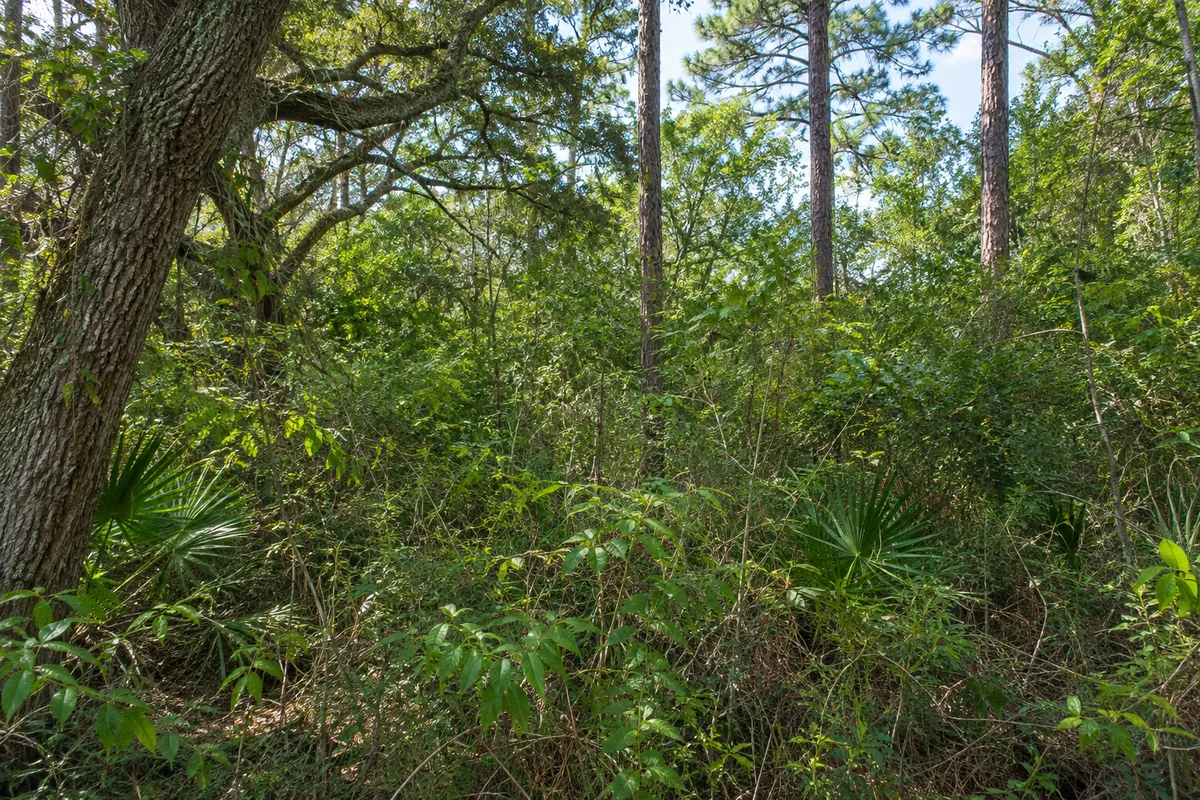
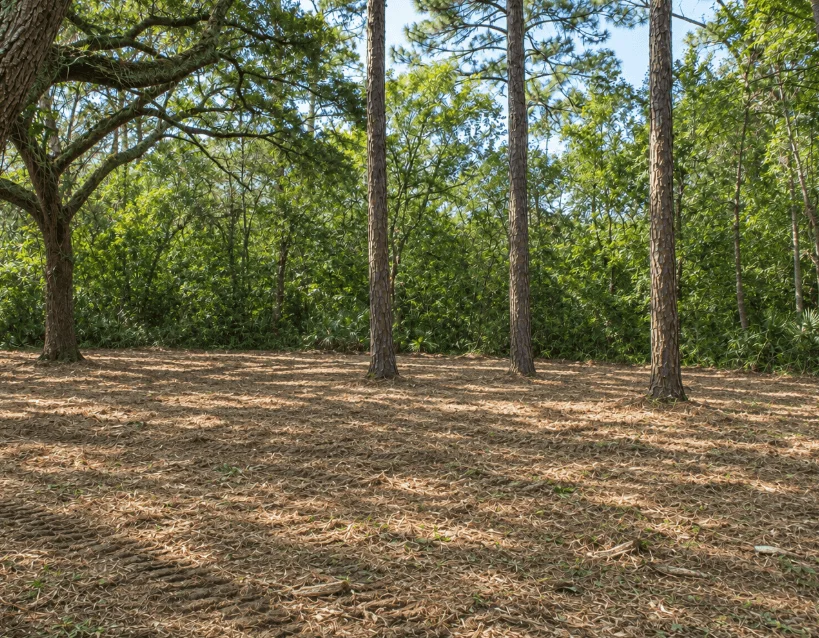
A customer wanted to open up their wooded area in Gray, but dense underbrush and smaller trees made it hard to walk through. We brought in our compact track loader with a forestry mulching head, mulched the thick growth and kept the marked trees the customer wanted to save. We left the material on the ground as mulch, making the area easier to walk and maintain. The customer was thrilled with how it turned out.
- Project Cost
- $2,625
- Timeline
- 1 day
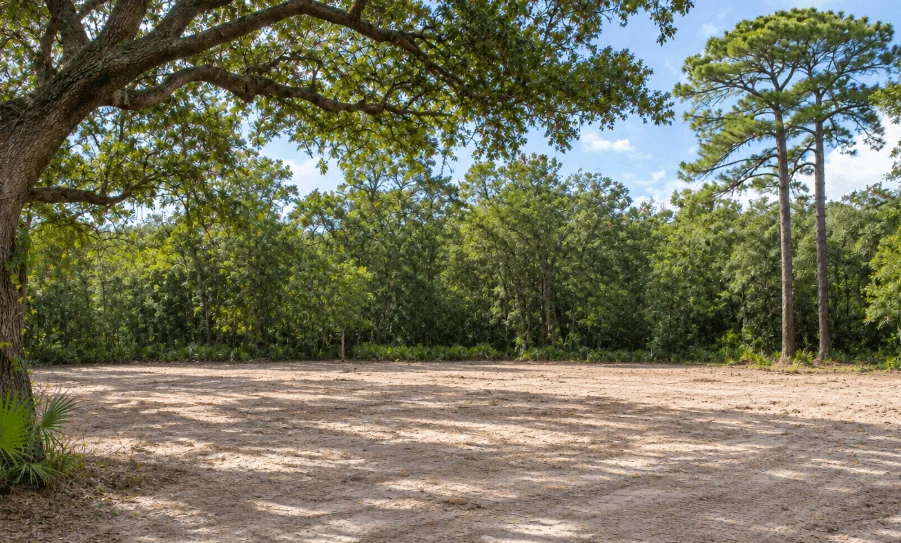
Land Clearing in Forsyth, GA
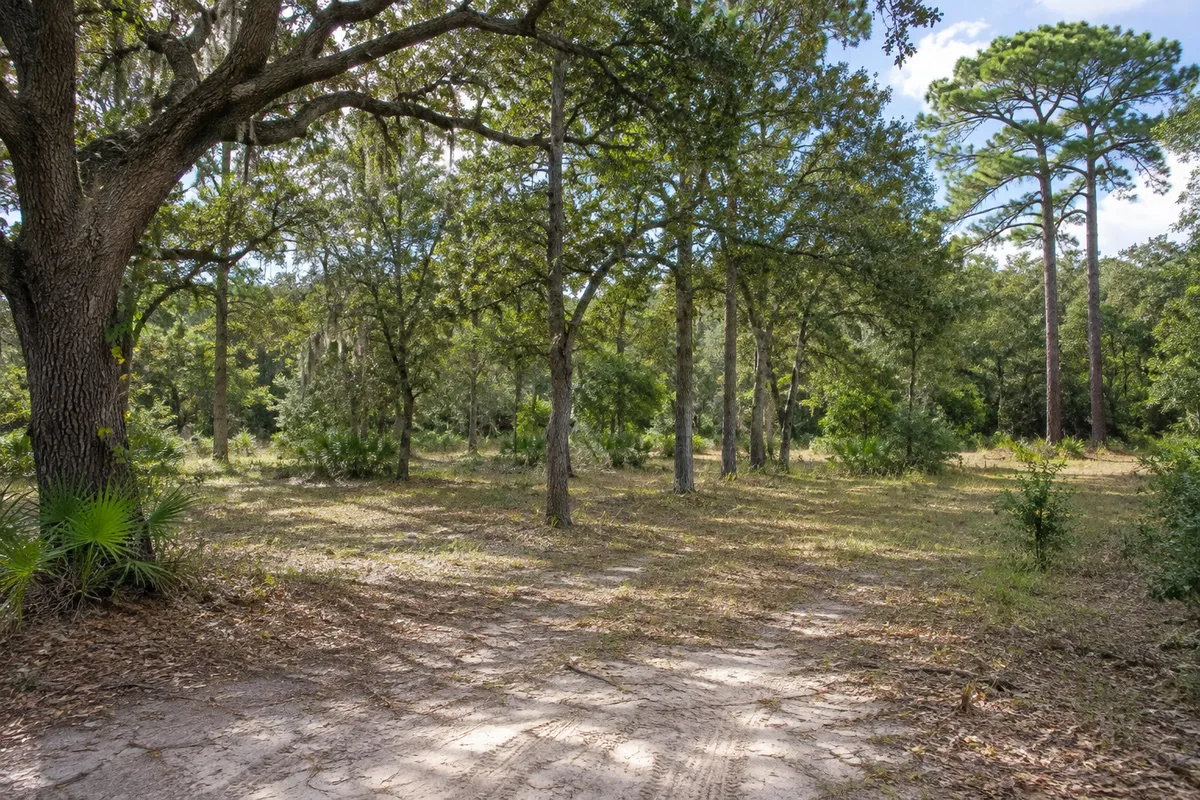
The owners in Forsyth needed room for an additional barn, but unwanted trees, thick underbrush and stumps blocked the area. We brought in our tracked excavator with a bucket and hydraulic thumb, along with a stump grinder, to clear the footprint. We removed the unwanted trees and brush, ground the specified stumps and hauled away the clearing debris. The area was ready for the next stage of property preparation, and the owners were delighted with the cleaner, more usable space.
- Project Cost
- $5,000
- Timeline
- 3 days
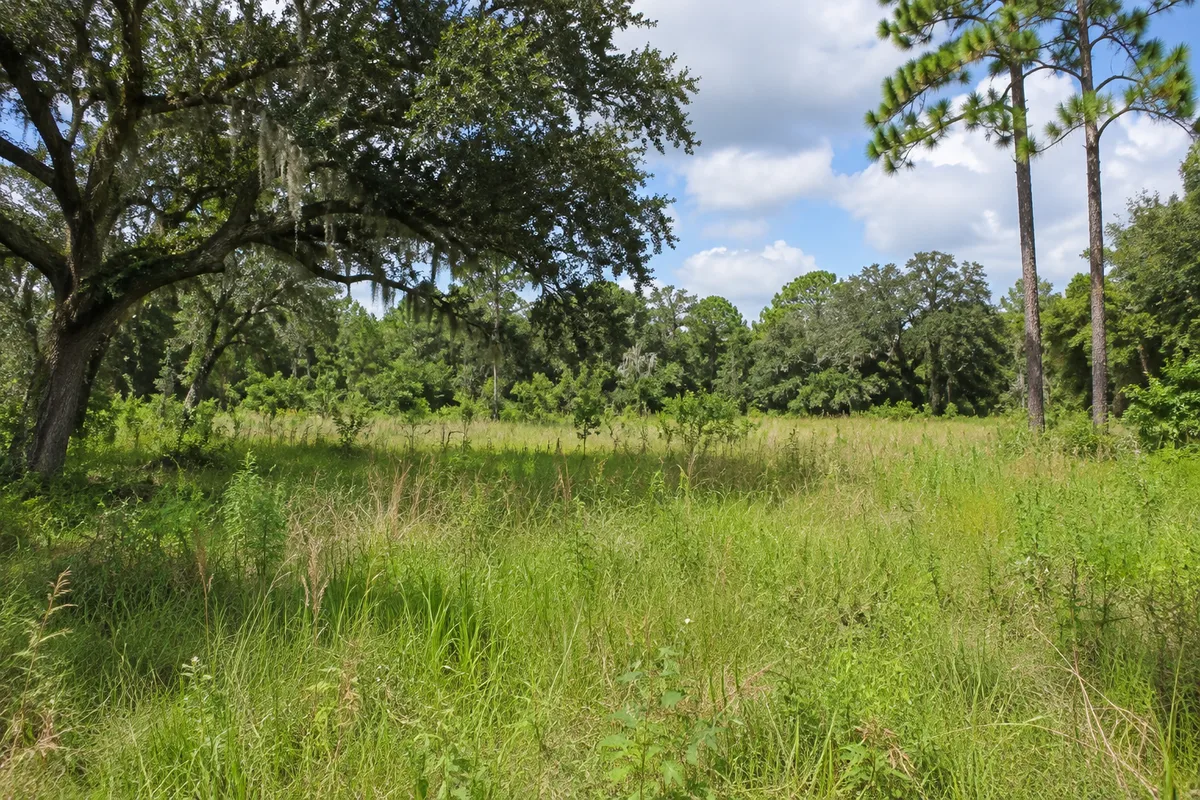
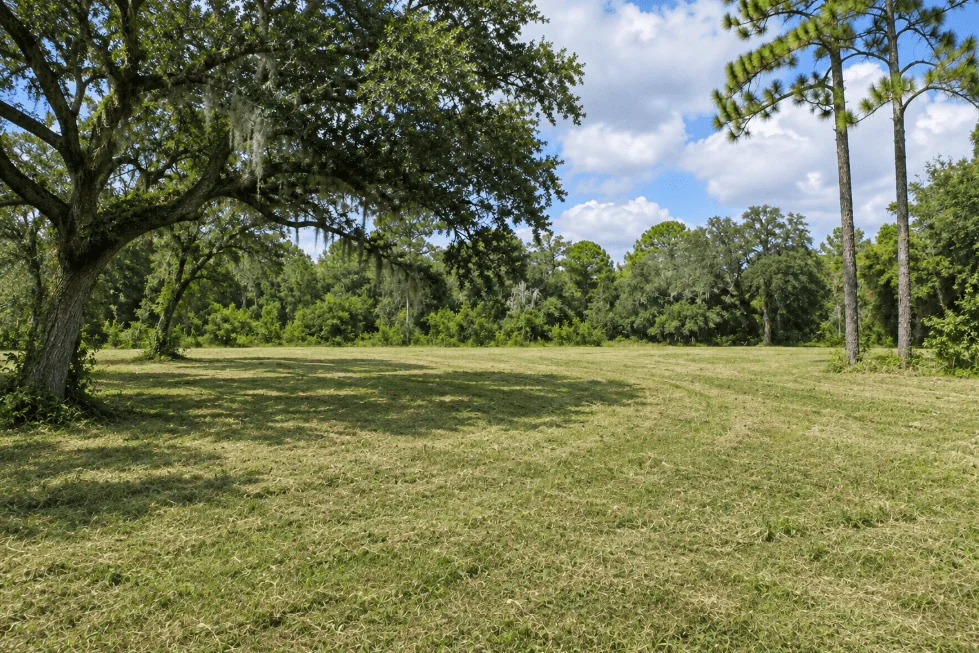
Bush Hogging in Warner Robins, GA
A customer in Warner Robins wanted to walk their field and enjoy it with family, but tall grass, weeds and light brush had taken over. We brought in our Kubota tractor with a rear mounted Land Pride bush hog and cut the overgrowth to a manageable height. We kept the surrounding trees and left the cuttings on site, opening the field for easier walking and regular maintenance. The customer was extremely happy to have a usable outdoor space again.
- Project Cost
- $525
- Timeline
- 3 to 4 hours
Land Clearing Services in Macon, GA
- Shred underbrush, woody shrubs and small trees; stems up to 7 inches assessed individually.
- Controlled passes around the trees you want to keep.
- Mulch processed on site; root removal and hauling are separate.
- Weeds and light brush with stems up to 1 inch in diameter.
- Planned cutting passes across fields, trails and fence lines.
- A manageable field finish while roots and surrounding trees remain.
- Cut and remove individual trees or agreed groups of trees.
- Handle trunks and branches with saws, grapples or an excavator.
- Confirm stump work, disposal and permits before starting.
- Cut high spots and spread soil across previously cleared ground.
- Fill agreed low spots and shape access or drainage routes.
- Specify fill, compaction and finish requirements.
Land Clearing Pricing
| Service | Prices | Typical Scope |
|---|---|---|
| Bush Hogging | $300 to $750 | Tall grass, weeds and light brush; small project range. |
| Forestry Mulching | $1,500 to $3,750 | Brush and suitable small trees mulched in place; project range. |
| Land Clearing | $2,500 to $10,000+ | Vegetation removal within an agreed footprint; project range. |
| Tree Removal | $450+ | Per suitable individual tree; size and access affect price. |
| Grading | $2,500+ | Rough grading project; material and drainage work quoted separately. |
General project ranges, not per acre rates or fixed quotes. Acreage, vegetation, tree size, slope and equipment access affect price. Larger or difficult jobs can exceed these ranges. Stump work, hauling, permits and construction pad preparation are quoted separately.
When Is Each Service the Right Fit?
Bush Hogging
Best for
- Tall grass, weeds and light brush with stems up to about 1 inch.
- Maintaining accessible fields, trails and fence lines.
- Recurring cutting where roots can remain in place.
Not the right fit for
- Large trees, stumps or root removal.
- Preparing a finished construction pad.
Forestry Mulching
Best for
- Dense privet, woody underbrush and suitable young tree regrowth.
- Suitable small trees up to 7 inches, assessed for the actual head and carrier.
- Selective opening where an on site mulch layer fits your plans.
Not the right fit for
- Extracting large root balls or hauling all material away.
- Finished grading or a foundation ready surface.
Land Clearing
Best for
- Permit approved trees of all sizes, with equipment matched to the job.
- Stump and root work when included in your quote.
- Opening a homesite, barn area or access footprint.
Not the right fit for
- Routine grass maintenance on an open field.
- Work in protected areas before the required approvals.
What Equipment We Use
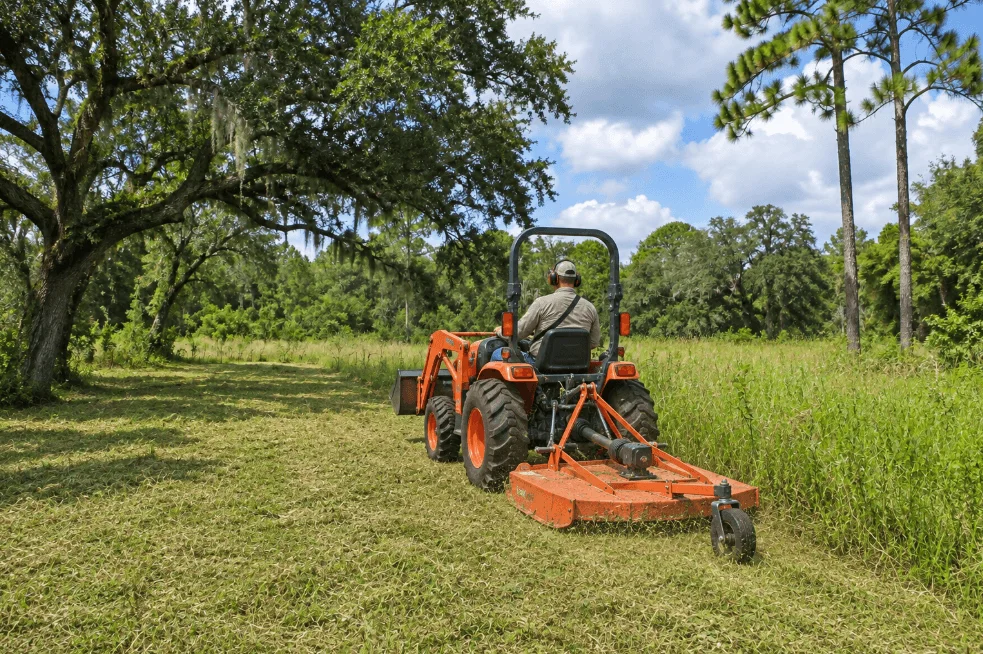
Kubota Tractor & Land Pride Bush Hog
We use a Kubota tractor with a rear mounted Land Pride bush hog.
- Setup: A rear mounted rotary cutter with a cutting width of 60 inches.
- What it cuts: Tall grass, weeds and light brush with woody stems up to 1 inch thick.
- Best use: Maintaining open fields, trails, fence lines and overgrown acreage.
Track Loader & Forestry Mulcher
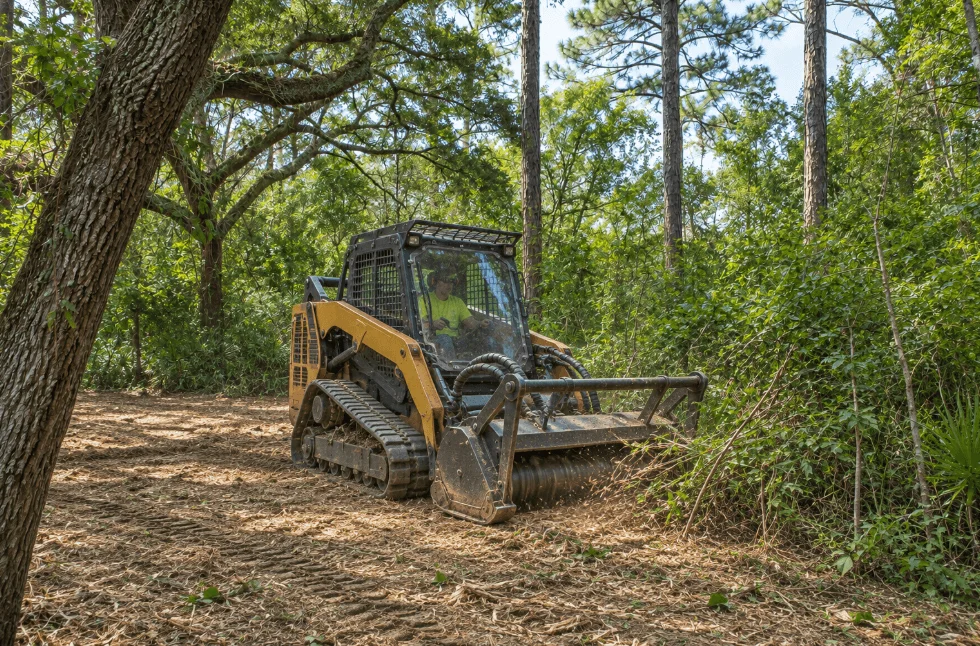
We use a compact track loader with a forestry mulching head.
- Setup: A front mounted drum mulcher cuts brush and turns it into a layer of mulch.
- What it clears: Thick brush and small trees, typically 5 to 7 inches thick, depending on the tree and ground conditions.
- Best use: Opening overgrown lots, trails and wooded acreage. Mulch stays on site, and roots remain in the ground.
Excavator, Bucket & Hydraulic Thumb
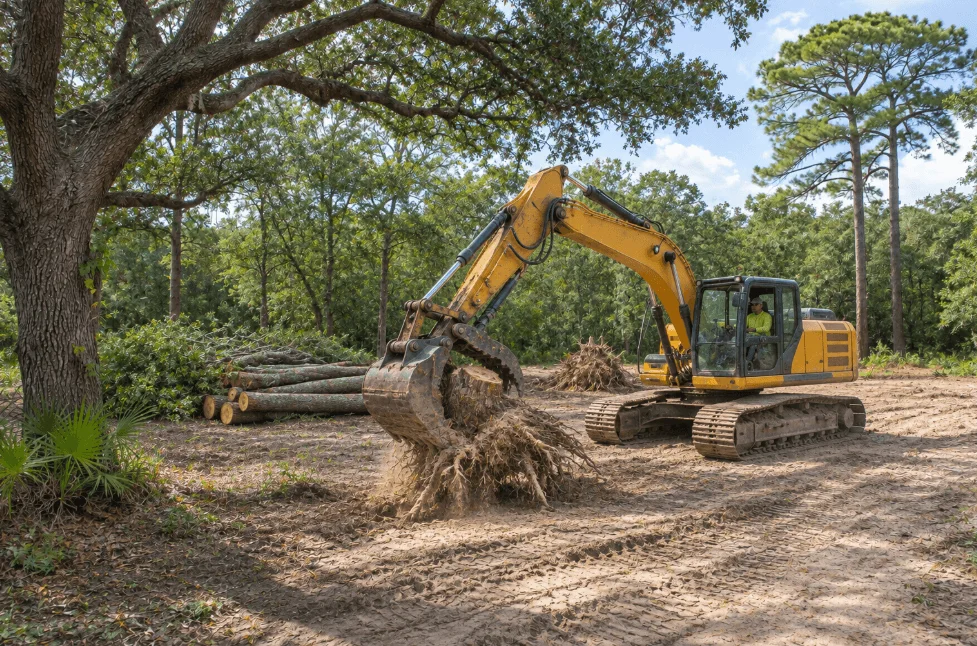
We use a tracked excavator with a bucket and hydraulic thumb.
- Setup: The bucket digs around roots, while the hydraulic thumb grips logs, brush and stumps.
- What it handles: Larger tree sections, stumps, root balls and heavy clearing debris.
- Best use: Full land clearing, removing roots and loading debris for hauling.
Vegetation & Trees We Handle in Macon
Macon lies near the meeting of the Piedmont and Coastal Plain. Pine and sweetgum regrowth, vine covered edges and overgrown fields each need a different approach to reopening the land.
Privet Thickets & Woody Shrubs
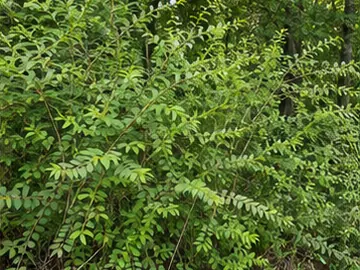
Chinese privet can form dense, small leaved thickets along Macon fence lines and woodland edges, hiding access and crowding other plants.
How we handle it: Suitable woody stems can be mulched; thicker growth or root removal needs a separate clearing scope. Privet may resprout, so follow up maintenance matters.
Kudzu & Climbing Vines
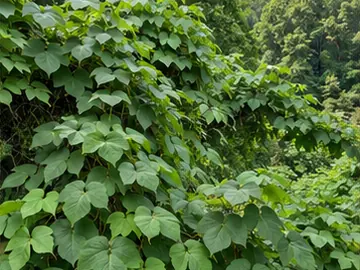
Kudzu can blanket brush and climb trees around Macon. Greenbrier and other vines can also tangle trails and fence rows.
How we handle it: We assess the supporting growth and hidden obstacles before cutting. Opening the vines does not eliminate established roots or guarantee permanent control.
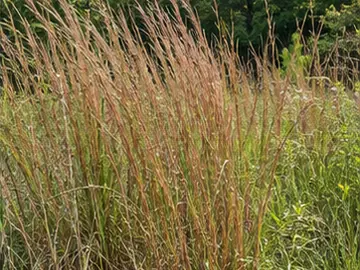
Broomsedge, Tall Grass & Field Weeds
Broomsedge and mixed field weeds can build up where Macon acreage has gone without regular cutting. Dry stalks and thick clumps can hide the ground.
How we handle it: Rotary cutting suits accessible grass and light regrowth. We check for wire, rocks and stumps first, then plan repeat cuts to keep the area usable.
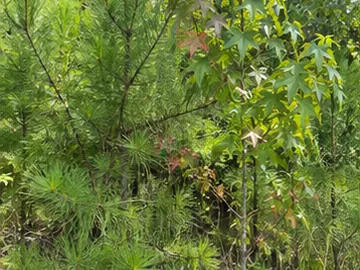
Loblolly Pine & Sweetgum Regrowth
Young pines and star leaved sweetgum can take hold on disturbed Macon land and along the edge of old fields. Closely spaced saplings can quickly obstruct access.
How we handle it: Thin stems may suit rotary cutting within the cutter rating; larger saplings need a suitable mulcher or clearing equipment. Sweetgum can return from surviving roots.
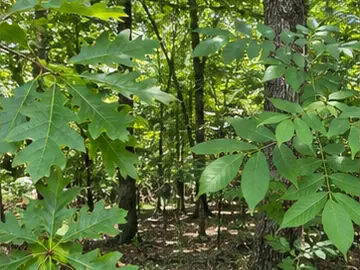
Oaks, Hickories & Mature Trees
White oaks, hickories and other hardwoods help shape wooded Macon properties. Mature crowns, heavy limbs and established root systems need individual planning.
How we handle it: Mark trees to keep before work. Approved removals may require controlled cutting, excavator handling and separately specified stump work; tree size alone does not establish permission.
Land Clearing Questions,
Clear Answers.
Do I need approval for land clearing in Macon?
The parcel and work determine the approvals. Routine field mowing, tree removal, land clearing and grading have different requirements. Macon Water Authority administers local erosion and sedimentation control and land disturbance permitting in Macon Bibb. We also check relevant Planning and Zoning requirements, state construction stormwater coverage and any stream, wetland or floodplain restrictions before work. Nearby counties have separate processes.
What is the difference between bush hogging, mulching and clearing?
Our bush hogging cuts grass, weeds and light brush with stems up to about 1 inch. Our track loader mulching process handles underbrush and suitable trees up to 7 inches, leaving mulch on site. Land clearing addresses permit approved larger trees, stump or root work and hauling, as included in your quote.
Will forestry mulching remove the roots and stumps?
A suitable mulching head can reduce exposed stumps, but mulching is not the same as extracting roots. If the area will become a driveway, barn or house pad, confirm the separate root removal and ground preparation requirements.
Is debris removal included?
Forestry mulch normally remains on the ground. For tree removal and land clearing, define whether material will be hauled away, processed on site or left in agreed locations. Stump grinding and root extraction should also be listed separately.
How much does land clearing cost per acre?
Acreage alone does not establish the price. Tree size and density, access, wet ground, stump work, hauling and the desired finish all matter. The starting figures above are project allowances, not per acre rates or fixed offers.
How long will my project take?
Light cutting may take hours, while clearing and haul off can take several days. The case studies show individual scopes, not guaranteed production rates. Acreage, ground conditions, equipment access, weather and approvals affect the schedule.
Can you keep selected oak and pine trees?
Yes. We mark retained trees and plan equipment routes around their roots. Machinery, debris piles and grade changes can damage trees even when the trunks remain. The agreed clearing limits and any applicable tree protection requirements guide the work.
Can you work near Macon creeks or Ocmulgee area low ground?
We inspect access, soil support, drainage and the proposed footprint first. Saturated ground may need a different approach or schedule. Stream buffers, wetlands and floodplain requirements are checked separately before disturbance. A property's actual conditions determine the work; not every Macon parcel is wet.
Does grading make the property ready to build?
Rough grading establishes an agreed shape; it does not certify a foundation pad. The building project may need engineered elevations, suitable fill, compaction testing, drainage approval and inspections. Agree on the handoff requirements with the next contractor.
Will one pass permanently remove privet or woody regrowth?
No permanent result is guaranteed. Cutting or mulching can leave roots and crowns that resprout, and seed can establish new growth. We discuss the desired finish and follow up cutting. Mechanical opening of an area is different from a complete invasive plant management program.
Should all native understory be cleared?
No. Native plants can support wildlife and protect soil. Macon area muscadine, yaupon and American beautyberry may be retained where they fit the property plan. We agree on useful paths, open areas and retained vegetation before work; invasive plant removal is a separate goal from clearing every plant.
Local Permit & Equipment References
NPS: Ocmulgee Mounds plants and habitatsNPS: Ocmulgee vegetation monitoring, 2023NPS: local invasive speciesUGA: Georgia trees, shrubs and woody vinesMacon Water Authority: engineering and land disturbance permitsMacon Bibb: Planning and Zoning coordinationGeorgia EPD: construction stormwater permitsBush Hog: rotary cutter capacity exampleFecon: mulching head and carrier considerations
Areas We Service
- Allentown, GA
- Barnesville, GA
- Byron, GA
- Centerville, GA
- Culloden, GA
- Danville, GA
- Forsyth, GA
- Fort Valley, GA
- Gordon, GA
- Gray, GA
- Irwinton, GA
- Ivey, GA
- Jeffersonville, GA
- Marshallville, GA
- McIntyre, GA
- Perry, GA
- Reynolds, GA
- Roberta, GA
- Warner Robins, GA
- Yatesville, GA